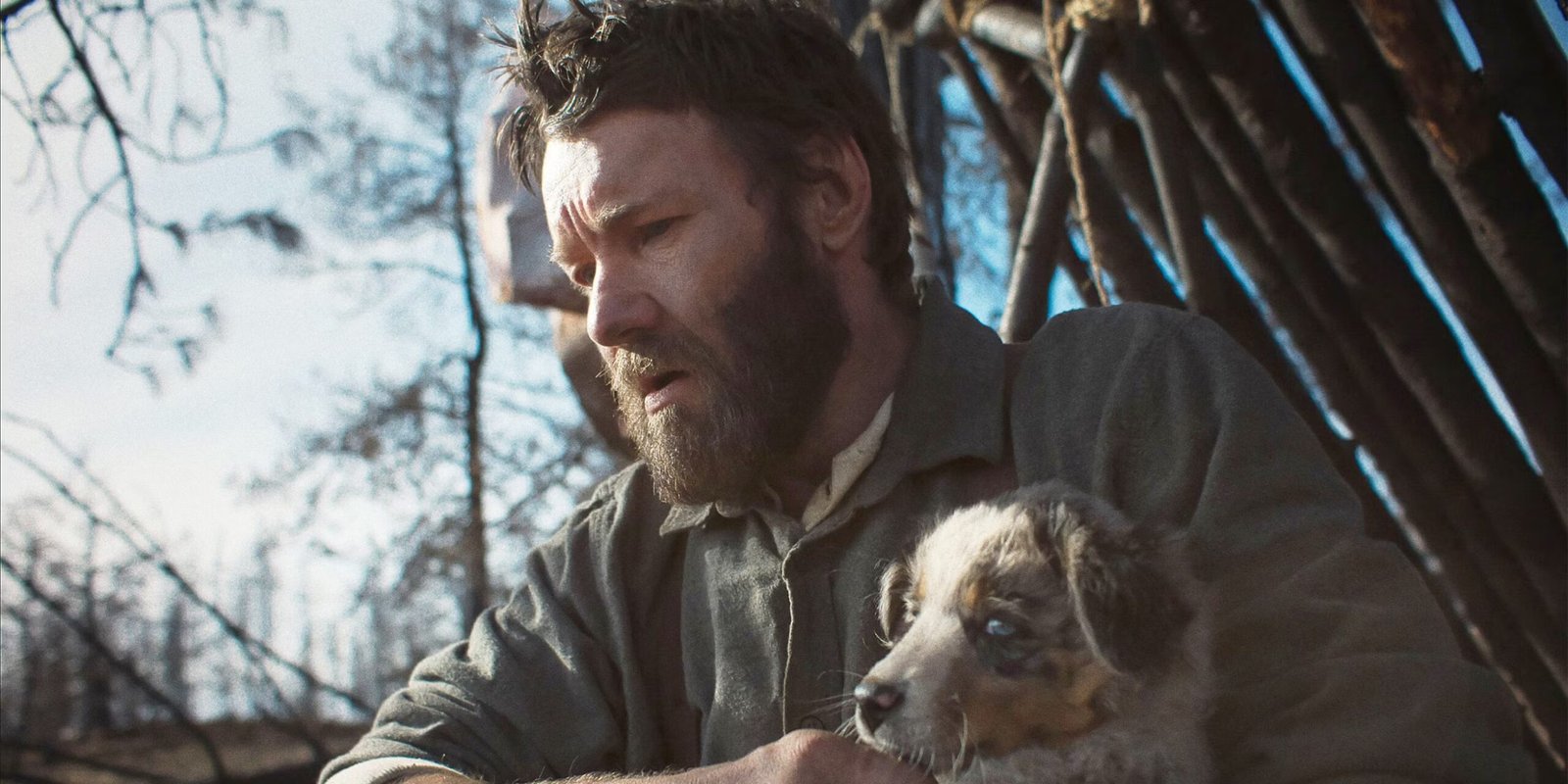
Joel Edgerton Reveals How His New Netflix Period Drama Became the Oscars’ Most Surprising Contender
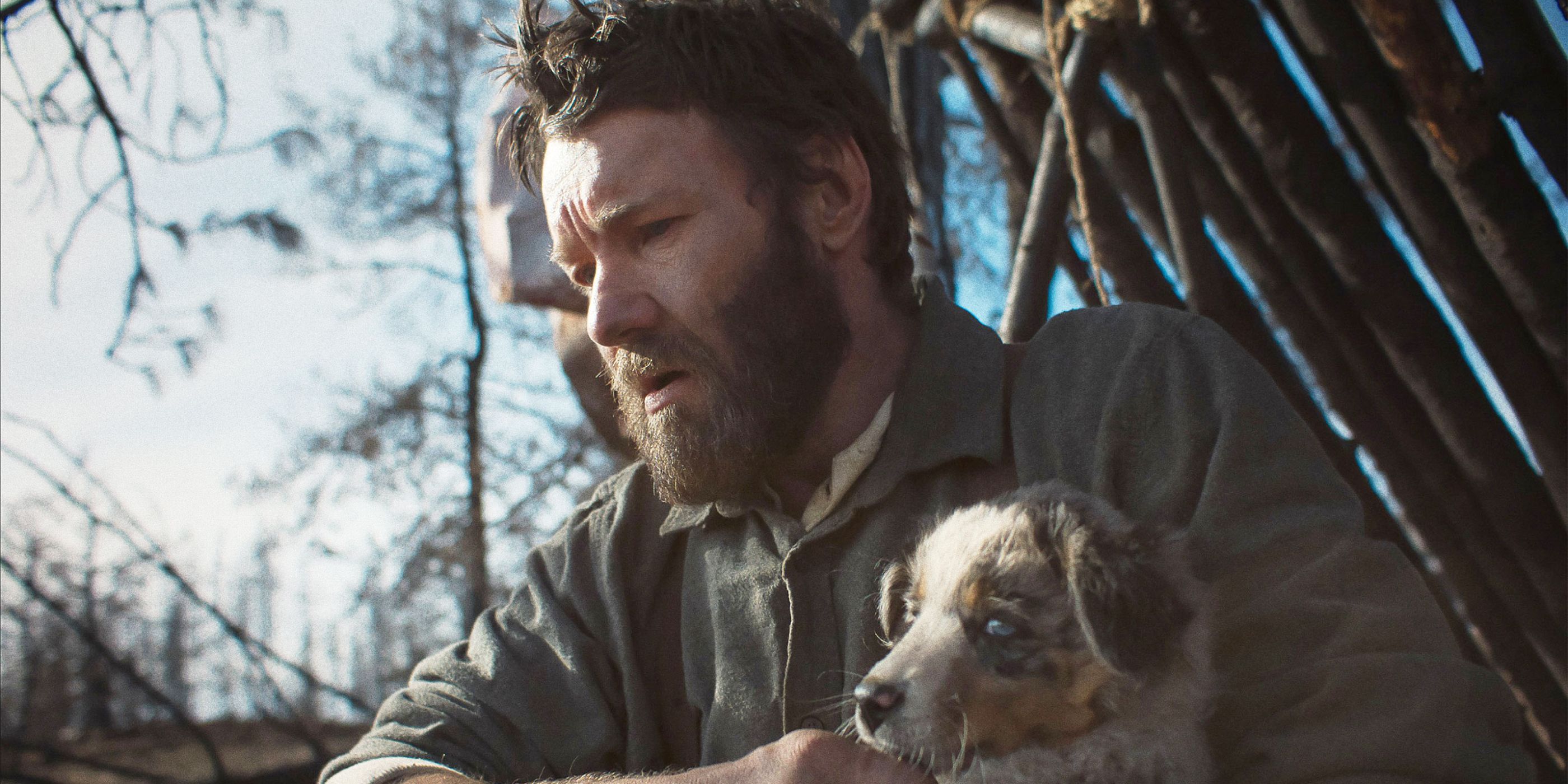
Summary
Collider’s Perri Nemiroff talks with Joel Edgerton for Netflix’s Train Dreams.
In this FYC conversation, Edgerton discusses why this period drama has struck a chord with audiences and why it’s so exciting to see this deeply human story garnering awards recognition.
He also discusses the journey of his career from Star Wars to his directorial debut, and why he’s beyond proud for people to discover his upcoming low-budget psychological thriller, The Plague.
One of the quietest contenders for Best Picture at the Academy Awards is Netflix’s period drama, Train Dreams. Directed by Clint Bentley (Sing Sing) from a script written with collaborator Greg Kwedar, this film may be more introspective and softer in its execution than, say, One Battle After Another or Marty Supreme, but the response has been overwhelmingly loud: Train Dreams is captivating. Based on Denis Johnson’s novella, Train Dreams is stunningly led and executive produced by Joel Edgerton, whose performance as solitary railroad worker and logger Robert Grainier carries its audience through a journey of grief and self-discovery across the breathtaking forests of the 20th-century Pacific Northwest. To highlight this performance that has more than earned its Best Actor buzz, Collider’s Perri Nemiroff had the opportunity to talk with Edgerton about the importance of a feature like Train Dreams receiving this kind of awards season recognition, and why he believes this story of an “ordinary life” has left such an impact on viewers. “The film has a certain universal kind of journey,” Edgerton tells Nemiroff. “It can be a very cathartic and emotional experience for people, but it also can elicit a lot of hopefulness around the whole purpose of why we live.” The writer, director, actor, and producer goes on to discuss why he believes Bentley’s meditative film is resonating so strongly with audiences, digging into the details of what he calls “a bit of an allegory or a fairy tale,” and the important characters Robert meets throughout played by Felicity Jones, William H. Macy, Kerry Condon, and more You can watch the video above, or read the transcript below, for the full conversation where Edgerton also takes a look back at his career, from Star Wars to his directorial debut, as well as to the future, with both Train Dreams and his new psychological thriller, The Plague, which he calls “Full Metal Jacket for kids.”
How ‘Train Dreams’ Became the “Little Train That Could”
Why is this quiet drama striking a resounding chord with audiences?
Robert is sitting in an airplane, smiling with his eyes closed.Image via Netflix
PERRI NEMIROFF: I’ve got a lot to cover here, but I wanted to start with the response to the movie because I really do believe it has been something next-level special. Whether it was at Sundance or something that happened along the way, do you remember the very first time that you noticed Train Dreams was striking an extra special chord with people in a really profound way? JOEL EDGERTON: Well, on a town level, on a business level, because as I get older, I realize that the film business is two halves of the same thing. On a creative level, there was this small movie that was made in a forest with a lot of care and love. Then we roll it out at Sundance with this certain anxiety when you’ve been so invested in something for so long, not knowing how it’s going to be received. On a business level, it was fascinating to see how in love with and bullish Netflix was about the film, which was a real coup, obviously, because now it’s led us to this place where so many people have seen the film. They’ve put so much support behind it that it’s become literally like the little train that could, to use a terrible pun. We’ve had lots of interaction with audiences. I’ve done so many Q&As, and so I’ve had lots of conversations with people. So, on a reception or creative level with audiences receiving the film, it’s been really fascinating to see that the film is so many different things to so many different people. I think it’s part of the tribute to Clint (Bentley)’s artistry as a filmmaker that the film has a certain universal kind of journey of an ordinary life played by myself, Robert, and that his experience is things that audiences can relate to in their own way, whether it’s being in love and being a parent and starting a family and wrestling with work versus life, and how to marry your industry with your personal family life, and also some of the things in life that knock us to our knees, and the regrowth beyond these events. It can be a very cathartic and emotional experience for people, but it also can elicit a lot of hopefulness around the whole purpose of why we live. So, I love that the film is different things for different people. I think that that’s a really good reflection of the movie, is that whatever it is for you, it’s for you.
Robert is holding Kate, offering her a yellow flower, and smiling.Image via Netflix
You brought up the idea of the importance of a film like this succeeding in this business, and I wanted to lean into that a little bit as it pertains to the awards season love it’s been getting. Of course, you don’t make movies to win awards, but when a film like this does get recognized, it can have a ripple effect — give more low-budget films a shot of taking off, perhaps get even more intimate and deeply human stories green lit, and then some. What does it mean to you to see a production like Train Dreams being recognized in these kinds of ways right now, especially given the state of the industry? EDGERTON: I feel like little movies are like Rocky Balboa at the beginning of the first Rocky movie. You just want a shot. You want a shot at reaching an audience. You want a shot at nestling in with the bigger things. But I do believe that a movie like this succeeds because of the kind of human relationships, and that even on the biggest-scale movies, the bigger the budget, the imperative is always that the characters and the human beings resonate with audiences. Because no matter how big the spectacle is, maybe the pressure is even higher to make sure that the human story within it has a significant kind of pull for audiences. So, in that sense, a small movie can be as big as a big movie. It can resonate as loudly. And I think Train Dreams is one of those things. There’s also something in the artistry of Clint, his ability to take less than $10 million and make it feel like much more. But despite the budget, it really comes down to, does an audience engage? Regardless of whether Netflix bought it, regardless of how much you show it, it’s still got to connect with the people that are watching it. I feel like this movie’s having that chance because it is striking a chord.
‘The Plague’ Is a Must-See Thriller From a First-Time Director
“I describe it as Full Metal Jacket for kids.”
charlie-polinger-the-plagueImage via IFC Films
I definitely see that happening big time. I also see that happening with another movie. I want to take a quick moment to celebrate The Plague, which is fantastic all around. Speaking of the importance of a movie getting some awards season love, that right there is a bold, genre-leaning movie from a first-time feature filmmaker, a bunch of people on that production making their first features, an ensemble loaded with incredible talent on the rise. What is it like seeing that kind of movie get the love it deserves? Also, what is it like getting into the same category at the Spirit Awards as Everett (Blunck)? EDGERTON: I know! The Plague is, again, an even smaller-budget movie than Train Dreams. But again, it’s a movie that could really connect with the audience, the universality of the themes of cruelty and adolescent tectonic plates, like whether you’re going to be a kind or a cruel person in life, told in a sort of half-genre prism of this body horror thing. I describe it as Full Metal Jacket for kids; you’ve got a bunch of 12-year-old boys at a water polo camp. But the filmmaking, Charlie (Polinger), as a first-time filmmaker, really planted the flag significantly (with) this piece of cinema. The film feels very full and complete in a more mature way than a typical first film might be. And I actually secretly feel like I’m patting myself on the back in that I read this script, and I saw Charlie’s short films, and I was like, “This guy’s going to make an incredible movie,” and I had in my mind this vision that he was going to do something extraordinary. Then, the film got into Cannes, and I went there and realized he had even exceeded my expectations. I just think that he is like Clint and Greg (Kwedar), behind Train Dreams. They’re the next generation of American filmmakers that I’m excited to see what they do next. So, The Plague’s won a bunch of festivals, Everett and Kayo (Martin), and all the young cast are being recognized for their work. Charlie, as a director, Steven Breckon, who shot it, they’re all being recognized, and this is cool. Very cool. I love it. Because I’m in the business of speaking into existence what I want, one of the things for The Plague I want the most is for it to break into the brand-new casting category. EDGERTON: It was incredible. Also, you’re talking about a cast of kids. A large amount of them had never really been in a movie before, and certainly not at the center of the movie. Everett had starred in one movie before. Kayo comes from the YouTube world, and I think you’ll be seeing a lot of Kayo in the future. Just an extraordinary cast. Actually, for me, I like to watch actors of my generation and older, and I feel like there’s a lot to learn by watching, getting a front row seat to perform with people, but there’s also a lot to be learned from working with kids who haven’t become jaded or cynical, or don’t have an idea of what they should be doing. They’re just pure and really excellent. I think it really deserves tribute for the casting because they’re so unique and unobvious, a lot of these young actors, but so perfectly suited for the roles that were written. Casting is a big component to any movie, obviously, being successful, and it’s proven in The Plague for sure.
Every Character in ‘Train Dreams’ Unlocks Something New
“The film sort of becomes a bit of an allegory or a fairy tale.”
The same is true of Train Dreams. I think everybody in this is pitch-perfect casting. It’s one of my favorite ensembles of the year, and also, I just love how each character in this movie brings something new out of Robert or adds something to his experience. Can you tell me something unique about each of your scene partners and how they helped you unlock another layer of him that you might not have been able to reach without them specifically? EDGERTON: That’s a really good question. I feel like Robert, in the movie, we go on this journey through his entire life, and these particular visitations by people reflect different things in life in a way that the film sort of becomes a bit of an allegory or a fairy tale in some sense to me. Felicity (Jones)’s character represents love and family. Felicity, to talk about her, was extraordinary in really dimensionalizing the relationship. We knew it was something we wanted to invest in. If we weren’t to invest in this relationship, then the second half of the film is not really going to work. A lot of the relationship that you see in the film is expanded from what was in the novella, and largely that’s thanks to Felicity dimensionalizing Gladys and our relationship, in not just romance terms and the love aspect of it, but the fabric of domestic life, the fears around parenthood, and the tensions that arise in a relationship, that it felt very full and real as a couple. Then I skipped off into the woods, and I spent a lot of time with William H. Macy and John Diehl. They represent, Bill, in particular, these people that you encounter in the life of work. There are people that you enjoy spending time with that make the work a bit easier, the friendship and the kinship, but you’re not necessarily sending each other Christmas cards, you know? And that was such a pleasure for me to be invested in a relationship where you go, “Well, I don’t necessarily trust this man fully. Not necessarily every single word is the truth, but God, he makes being away from my family a hell of a lot easier, and I look for wisdom from him.” And I certainly could easily do that with an actor like Bill, because I admire him so much.
Arn Peeples stares into the distance in a hat and glasses.Image via Netflix
Nathaniel Arcand and Kerry Condon represent something else, which is these people in our lives, strangers to a certain degree, or acquaintances, that become an integral part of our regrowth, and are there to support and remind us of the core value, I think, of humanity, which is I think we actually genuinely want to support each other, even if we don’t have something to gain from another person. We’re willing to support them in the simple act of giving food and checking up on me, as Nathaniel Arcand’s character does. Then, with Kerry, this chance encounter with a woman that thankfully doesn’t turn into any kind of need for romance, but something more potent and more important, which is a platonic kind of character who has had a similar experience to Robert that he’s drawn to in a different kind of way. She becomes someone who he maybe doesn’t realize he needed to meet on his journey, who’s going to finally help him express a lot of the things that he has pushed down inside of him. I think those scenes, in particular, for me, became some of the most significant scenes, and finally, a chance for Robert, who’s been very nonverbal for most of the film, as you know, to finally kind of talk about things that he feels. Every single one of these actors I got to work with, and each of these scene partners in scenes, was such a pleasure.
Related
Joel Edgerton Always Has This in His Pocket, And Now So Does His ‘Train Dreams’ Director
The film is adapted by ‘Sing Sing’s Clint Bentley from the Denis Johnson novella.
How Joel Edgerton Learned To Let Go of the Mask
The multi-hyphenate shares how projects like Star Wars and his directorial debut shaped his craft.
Robert is resting his elbow on a tree trunk, smiling.Image via Netflix
To kind of zero in on your craft, I’m a big nerd for the variety of acting techniques out there, and also how one’s craft can evolve, so I wanted to follow up on something I heard you mention in another interview. You were talking about learning from each film as an actor and how “you need to think about a different set of tools for each project.” Can you tell us a new tool you picked up working on a franchise film earlier on, like Star Wars, another one you picked up working on a film where you were directing yourself in The Gift, and then a brand-new tool that was added to the toolkit by working on Train Dreams, where everything is so internal, and you have to express a lot with minimal dialogue?
EDGERTON: The same way that I think an actor prepares in whatever way they do, and everybody’s process is their own mystery, there’s no way you can really craft a performance in your own room before you turn up to set. There’s a lot of thinking you can do and a lot of work you can do, and whatever that work is is personal for anyone who’s doing it. But at some point, you’ve got to go and participate and let the scene live and breathe. So, to hold onto ideas that you’ve kind of decided upon at an early point is a little futile in my mind. That said, there’s also this approach to every story, like you mentioned, that I feel like you need to look at the environment and the tone of the film, and the pace of the film, and the mechanics of it all, and start to work at how you contribute the best you can do and how you fit into the world, and how you either don’t get swallowed by the world you’re in, or you’re not too loud or too chaotic for it, or whatever. In Star Wars, hats off to people like Timothée Chalamet and young Lucas Hedges, who I worked with, and the kids from The Plague, who managed to have worked it out at such a young age. I felt like I was at odds with most things that I was doing when I was young. I was nervous and wasn’t sure how to approach certain things, and I was actually quite amazed that people let me keep working at certain points. I used to spend a lot of time on each film feeling like I was going to be fired. I always got to this point, like a week in, where I was like, “I’m still here.” At two weeks in, I was like, “Alright, it’s too late for them to fire me now. It’d cost them too much money.” But I guess in a way I wasn’t really confident. I wasn’t backing myself. In Star Wars, I was lucky, and I was thrilled to be able to participate. I don’t know that I was learning anything except just trying to gain a certain confidence of earning my place to be there, and so on. By the time I’d made The Gift, I’d picked up a few more tools in my toolkit, and I had a certain confidence. I nearly pulled out of playing the character in The Gift because I’d never directed a movie before, and I didn’t want to muddy the process. I didn’t want to destroy my own first-time chance to direct a movie by also insinuating myself in the process and then acting it. However, I’d spent so much time writing it that I felt like I knew that character so well, and I’d auditioned myself years earlier. I shot a couple of scenes in my house in LA, and I knew what that character needed. I knew what I needed to do. I sat in a Starbucks in the Valley, and I decided I was going to find an aggregate of all the men I saw walk in there. That’s where I decided I needed a goatee, I needed an earring, and I needed to dye my hair and just look like a strange, unusual, mysterious human being, but it was more energetically that I knew what I needed to do.
Joel Edgerton as Gordo in The Gift.Image via STX Entertainment
That was one of the first times I started to sort of fly by the seat of my pants, as in, just be so free and let go of things, and effortless in the performance, partly because I had so much else to concentrate on, as in I had to shoot the scene, I had to choose the shots, I had to make a lot of other decisions. Something I learned from that was that my brain was so full of other stuff that I wasn’t hyper-focused on performance in a good way, and that freedom became a new kind of mantra for me. It’s like, look for so much preparation that by the time you get to set, you can be so free that anything is possible. Writing a film, strangely, I didn’t realize, became the longest preparation for playing a character. Train Dreams was a different experience to me. I guess in terms of the analogy of a tool kit, I realized that for years, like with The Gift or Black Mass or The Great Gatsby, I was looking to play characters that weren’t really like me energetically, or had a different rhythm, or a different view on the world. It was like a kid reaching into the dress-up box, and I think I like to wear masks. I liked to think that I was less interesting than a character I could play. My favorite actors were character actors and people who disappeared. Train Dreams had come along at a time when the character really reflected who I was in my life at this moment, as a husband and as a father, and a person that’s constantly wrestling with going away from my family for work, even though I’m not a logger, and that my greatest terrors and fears are all about the safety of my family. I realized just how personal a performance this could be for me in Train Dreams, that I didn’t need to wear a mask, and I didn’t need to play dress-up too much psychologically. I could be semi-autobiographical in my approach emotionally to the character and not reach so far from my imagination to imagine what it would be like to be this guy, because I was going through a lot of these experiences as we were shooting. So, I guess Train Dreams taught me to trust myself on screen a little bit more and to look for more of those experiences that I’m more connected to. Train Dreams is available to stream on Netflix now.
Release Date
November 7, 2025
Runtime
102 minutes
Director
Clint Bentley
Writers
Greg Kwedar, Clint Bentley
Producers
Ashley Schlaifer, Marissa McMahon, Michael Heimler, Teddy Schwarzman, Will Janowitz
Publicado: 2026-01-05 15:00:00
fonte: collider.com